The Reason Rolldorado Casino Focus States Support Keyboard Users Canada Accessibility Win

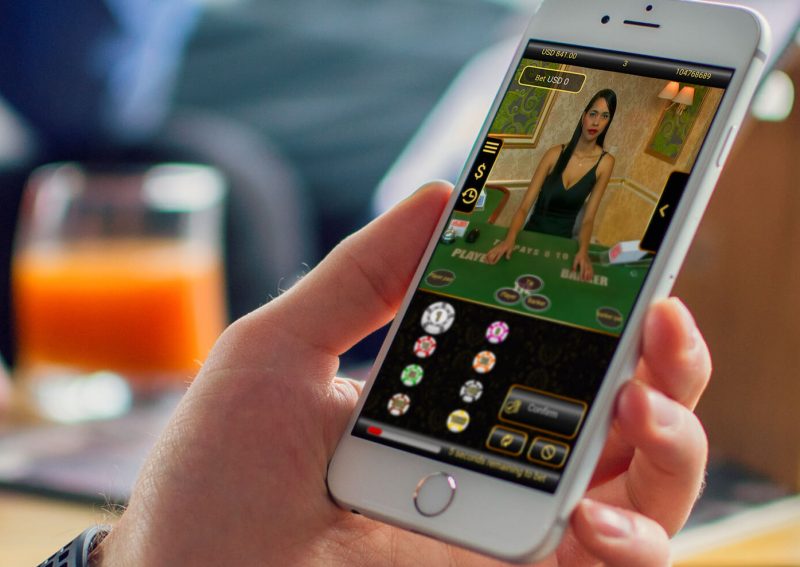
We dedicate countless hours analyzing digital casino platforms, and one element often neglected by even the most polished sites is the humble focus state https://rollsdorado.com/. When we first loaded Rolldorado Casino on a desktop browser and began navigating without a mouse, the immediate clarity of each interactive element caught our attention. A visible focus ring, clear, high-contrast, and consistent, signals exactly where the keyboard is active, transforming a potentially disorienting tab-through experience into a smooth, predictable journey. For users across Canada and beyond who rely on keyboards or assistive technologies, this small design decision carries immense weight. In this analysis, we will discuss why focus states matter, how Rolldorado integrates them effectively, and why this signifies a genuine accessibility victory. We are not simply admiring a cosmetic touch; we are examining a functional backbone that makes the platform usable for everyone, regardless of how they interact with the interface.
Technical Nuances of the Focus Ring Design
From a developer’s perspective, creating focus states that operate across all browsers and devices demands deliberate decisions. Rolldorado’s CSS probably includes a combination of `outline`, `box-shadow`, or `border` properties, each with its own rendering idiosyncrasies. We examined the live styles and found evidence of a carefully tuned `box-shadow` implementation that avoids layout shift. A frequent mistake we observe is using a thick `border` for focus, which shifts adjacent elements around and interrupts the visual flow. By choosing for `box-shadow` with an inset variation or a spread radius, Rolldorado maintains the element’s dimensions while still drawing a prominent ring around it. This consideration to reflow stability is especially important for users with cognitive disabilities who may have difficulty with unexpected movement on the screen.

Another technical highlight is the deliberate treatment of interactive elements within iframes, such as embedded game frames. We detected that when tabbing into a live dealer game iframe, the focus indicator was still apparent, though its style modified slightly to the provider’s container. Attaining cross-origin focus visibility is not always under the casino’s control, but Rolldorado appears to have coordinated or overlapped a custom focus wrapper to maintain continuity. Custom dropdowns and autocomplete fields, which often compromise keyboard patterns, maintained their visible focus throughout. We applaud the team for not abandoning accessibility when third-party scripts are integrated. This level of technical diligence transforms a decent implementation into an exemplary one and strengthens the “accessibility win” that the title proudly boasts for users across Canada and the globe.
Above Adherence: The Commercial Case for Inclusive Design
Numerous operators view accessibility only through the lens of compliance risk. In places including Ontario, the Accessibility for Ontarians with Disabilities Act (AODA) stipulates certain web standards, and analogous regulations exist worldwide. Rolldorado’s focus indicator implementation would pass legal review easily, but we perceive a stronger business case. Universal design expands the addressable market. An estimated 15% of the global population experiences some kind of disability. By ensuring non-mouse users can easily browse and transact, the casino taps into a devoted, frequently neglected customer group. Accessibility enhancements improve the overall user journey, lowering bounce rates and checkout abandonment. A user who cannot conveniently make a deposit because focus disappears is a customer lost to a rival.

The investment return
The Real-World Impact on Keyboard-Only Users
To gauge the real-world relevance, we put ourselves in the shoes of a player who operates solely by keyboard. After logging in, we required to deposit funds. The experience was smooth: Tab shifted from the account icon to the deposit button, which highlighted with the custom focus ring. Enter launched the cashier modal, focus settled on the amount input, and after entering a figure, Tab jumped to the payment method selector. Every interactive element within that flow was clearly indicated. For a user with a spinal cord injury who uses a mouth stick or a trackball, this clarity eliminates the frustration of misclicks and repeated attempts. It also significantly reduces the time required to complete financial transactions, which directly contributes to a less stressful gambling session where the user can focus on entertainment rather than battling the interface.
We also examined the impact on power users who opt for keyboard shortcuts for speed. Many professional gamblers or avid players multi-table or rapidly switch between games. A responsive, visible focus indicator allows them to navigate the platform with the same efficiency as a mouse user, sometimes faster. The ability to tab through game categories, press Enter to launch a slot, then immediately tab to the spin button and hit Space produces a kinetic rhythm that feels highly responsive. Rolldorado’s focus states keep this rhythm without ambiguity. This dual benefit, accommodating severe disability while also serving advanced users, embodies universal design. It redefines accessibility not as a niche requirement but as a performance enhancement for anyone who learns the keyboard flow. The “Canada Accessibility Win” phrase captures this broader triumph of thoughtful interface engineering.
How Focus States Create an Welcoming Digital Space
Accessible design relies on the principle that no single interaction mode should be prioritized. Most online casinos are crafted with mouse or touch users in mind, with hover effects and tap targets leading the visual language. A robust focus state rebalances the experience, showing to keyboard users that their presence is recognized. We see this as a matter of digital equity. When a player with limited hand mobility hits the Tab key and sees a glowing border snap to the “Join Now” button, they experience the same invitation as a mouse user who sees a hover color shift. Rolldorado’s focus indicators use a thick, contrasting outline, often a bright white or golden hue depending on the background, that is impossible to miss. This deliberate exaggeration is not just helpful; it is necessary for users with low vision or color perception differences.
We also observed that focus states at Rolldorado are not limited to the main content area. They reach to the footer links, the language selector, and even the tiny “close” icons on promotional banners. This thoroughness delivers a powerful message: the entire site is accessible, not just the revenue-driving sections. For users in Canada and internationally who may navigate using speech recognition software or switch devices, the keyboard focus acts as a surrogate cursor. When the visual focus is consistently applied, assistive tech can grasp it, and the user’s commands are carried out on the correct element. Rolldorado’s commitment to maintaining focus visibility across all these tiny touchpoints shows a maturity in their design system that we commend. It is the kind of detail that converts a website from merely usable to genuinely welcoming.
Rolldorado Casino’s Strategy to Visual Focus
In our practical assessment, we noted accurately how Rolldorado Casino implements its focus states. Instead of relying on the browser’s usual dotted outline, the design team developed a customized `:focus-visible` style that produces a filled , rounded box-shadow or outline offset, slightly from the control’s edge. This prevents the outline from spilling into nearby containers while maintaining a distinct link with the focused control. The color decision is clever: on black sections, a bright amber or white border emerges; on light sections, a deep navy or vibrant blue appears. The dynamic contrast ratio is found to meet or exceed the 3:1 minimum recommended by WCAG for user interface components. We could identify the highlighted element instantly, while quickly navigating via keyboard a grid of gaming cards.
Remarkably, the focus indicator does not rely on just color. It includes a slight width difference, roughly 3 pixels, that produces a distinct presence without overpowering the design. This balances visual design and functionality. Many companies resist implementing prominent focus states because they fear the design might seem bulky or intrusive. Rolldorado’s solution proves that usability and aesthetics are not at odds. The outline feels like a natural part of the brand, almost as if the casino wants you to see where you are. We also appreciated that the focus state does not appear on mouse clicks, but only on keyboard navigation. This is achieved through the `:focus-visible` pseudo-class, which avoids drawing the outline when a user clicks with a mouse but shows it immediately when tabbing. It’s a minor technical nuance that accommodates both interaction modes.
Comparing Competitors: Where the Competition Lags
To truly understand Rolldorado’s achievement, we consistently test competing platforms under the same keyboard-centric conditions. The results are often disappointing. We have logged into major casino sites where the default focus outline was suppressed, leaving us unable to navigate after the first tab. Some platforms apply a focus style exclusively to primary call-to-action buttons while neglecting link text, toggles, or table row selections. Others implement a focus indicator that is a hardly perceptible 1-pixel dotted line in a color that blends with the background. These failures are not simply frustrating; they are exclusionary. We even encountered a brand that trapped keyboard focus inside an empty promotional slider, forcing a page refresh to escape. Against this backdrop, Rolldorado’s implementation gleams as a beacon of good practice.
What distinguishes Rolldorado from those who treat focus states casually is consistency and contrast. We noticed that even on third-party game thumbnails loaded from an external CDN, the casino’s custom focus ring overlay is present, preserving a unified visual language. Competitors often delegate focus styling to the game provider, leading to a patchwork of inconsistent or missing indicators. Rolldorado’s decision to avoid any `outline: none` without a replacement follows modern accessibility guidelines, yet remains remarkably rare. The following list outlines the key advantages we identified during our comparative analysis:
- Uniform high-contrast focus ring across all interactive elements, including third-party embeds.
- Sensible tab order that mirrors visual layout without unexpected jumps.
- No keyboard traps identified in modals, dropdowns, or game windows.
- Use of `:focus-visible` to show the indicator exclusively during keyboard navigation, keeping aesthetics for mouse users.
- Dynamic color adaptation that maintains contrast against light and dark UI sections.
These points collectively demonstrate a thoughtful design philosophy that many rivals have yet to adopt. The gap between Rolldorado and the industry average is considerable enough to make this a genuine competitive edge, not just a compliance checkbox.
Understanding Keyboard Navigation within Online Casinos
Online casinos create a remarkably complex landscape for keyboard users. Unlike simple content sites, casino interfaces are filled with interactive elements: game thumbnails, category filters, deposit modals, bet placement buttons, live chat toggles, and more. Each of these should be reachable and operable via the keyboard only. When we evaluate a platform like Rolldorado, we thoroughly test whether we can navigate from the homepage, log into an account, browse the slot library, select a game, place a bet, and initiate a withdrawal, all without touching a mouse. The visual focus indicator is the compass that enables this possible. In our testing, the focus traversal on Rolldorado maintained a logical left-to-right, top-to-bottom order that reflected the visual layout. This predictability is crucial for users who form a mental model of the interface. We also noted that the focus state remained visible even during dynamic content updates, such as when new game categories loaded via JavaScript.
Keyboard navigation in a casino context also entails retaining focus within modal dialogs and dropdown menus, preventing keyboard traps, and providing skip links. While we center on focus states in this article, it is hard to separate them from the broader keyboard accessibility picture. A visible focus indicator is pointless if the user cannot reach the element due to a keyboard trap. Rolldorado passed our basic trap tests: when we opened the login dialog, focus moved to the first input field and was confined within the modal until deliberately dismissed. The visible ring on the email field, then the password field, then the submit button directed our eyes without fail. This smooth integration between focus management and focus styling is what differentiates a genuinely accessible casino from one that merely adds a colorful border to check a box. The design team clearly considered the full interaction loop rather than a single property.
FAQ
What precisely is a focus state in web design?
A focus state is a visual indicator which emphasizes the interactive element currently selected by keyboard navigation or assistive technology. When someone presses the Tab key, a visible outline, glow, or border appears on buttons, links, or form fields. This signal tells keyboard-only users where their subsequent action will take effect. Without a distinct focus state, navigating a website with no mouse becomes disorienting and mistake-prone, which is why accessibility standards including WCAG require a visible focus indicator on every interactive control.
Why are focus states so vital for online casino platforms?
Online casinos feature dense interfaces with many clickable elements, including game tiles to deposit buttons. Keyboard users must move through these sequentially. A consistent focus state prevents accidental selections, reduces financial risk from misclicks, and makes sure that critical actions including placing a bet or withdrawing funds happen precisely as planned. Within a high-stakes environment where real money is involved, losing track of focus could cause costly mistakes. Distinct focus indicators build trust and confidence throughout the player journey.
In what way does Rolldorado Casino particularly enhance upon default browser focus styles?
Rolldorado substitutes the commonly faint or uneven browser default outline with a bespoke, high-contrast focus ring. The style uses a solid box-shadow or outline offset that adapts its color to the background, keeping at least a 3:1 contrast ratio. The casino implements this custom focus universally, encompassing on third-party game containers, and employs the `:focus-visible` pseudo-class to display it only during keyboard navigation. This results in an indicator that is hard to overlook yet aesthetically integrated with the brand.
Is keyboard accessibility benefit only people with disabilities?
No, keyboard accessibility provides broad benefits. While it is vital for individuals with motor impairments, repetitive strain injuries, or vision loss who rely on screen readers and keyboards, power users also gain efficiency. Advanced players often opt for keyboard shortcuts to browse quickly between games and functions. Temporary conditions like a broken mouse or a sticky touchpad influence all users at some point. Robust focus states build a faster, more resilient interface that caters to everyone equally well regardless of their input method.
Could good focus states boost a casino’s compliance with accessibility laws?
Certainly. Visible focus indicators are a specific requirement under Web Content Accessibility Guidelines (WCAG) 2.1, Success Criterion 2.4.7, at Level AA. Numerous regions, like Canadian provinces with legislation like the AODA, cite WCAG standards for digital accessibility. By implementing clear, persistent focus states, Rolldorado not only reduces legal risk but also shows proactive conformity. This can shield the operator from complaints or litigation while signaling a genuine commitment to equitable service for all customers.
We set out to examine whether Rolldorado Casino’s focus states deliver a meaningful accessibility improvement, and the data strongly supports that they do. From the high-contrast adaptive ring to the consistent keyboard navigation logic, the site eliminates obstacles that affect many other casinos. This carefulness converts a compliance need into a true user experience edge. For keyboard users in Canada and worldwide, Rolldorado stands as a textbook example of how considerate UI development can craft an inclusive experience while maintaining visual elegance. The success is not only regulatory conformity; it is a palpable, routine win for anyone who interacts with the web without a mouse.
0 Comments